Haven
The Knife of Never Letting GoHaven is the longed-for destination at the end of Todd and Viola’s river journey, at once a possible refuge from an advancing army and a city they locate by reading the landscape. Its significance changes as they approach: a name passed along by others becomes a route, then an inference about where a settlement must stand, and at last a visible place in the valley beyond the falls.
The Destination and Its Promise
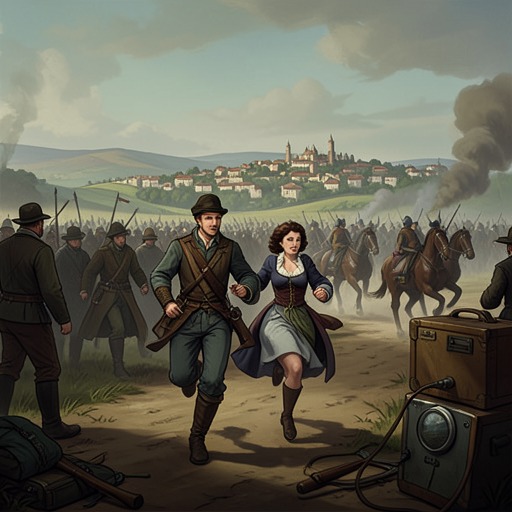
Haven enters the journey as a place Viola has heard about from Francia. The practical instruction is to keep following The river, giving the fugitives a direction when they have little else to rely on. The route does not make their safety certain. Todd and Viola recognize that they cannot expect help before Haven, and Viola frames even that hope conditionally: the place must be large enough to handle an army. Haven therefore stands not as guaranteed sanctuary, but as the only named prospect between them and the forces pursuing them.
That uncertainty gives the name weight. Todd understands that he and Viola are on their own until they reach it, with Manchee and the darkness for company. Haven is both a destination and a test of expectation: the journey depends on a settlement they have not yet seen, whose capacity to protect them remains unknown. The river offers a way forward, but no assurance that the place at its end can keep them safe.
A Route Through Danger
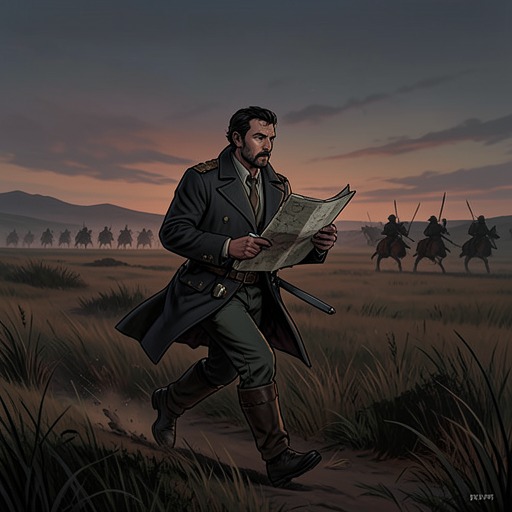
Haven’s direction shapes the fugitives’ choices well before it comes into view. When Todd is injured and escaping the army, Manchee runs along a track parallel to The river and leads him away from the soldiers. Todd follows despite his injuries, taking the dog’s movement as guidance toward Haven. The route is not an abstract line on a map: it is a pursuit-side trail through bushes and around an outcropping, chosen under immediate pressure.
Later, after Todd rises in the aftermath of violence and disorientation, Manchee again points him down the river. Todd follows through a burnt-out settlement, past what appears to have been a church, and up a small bluff as the wind strengthens and the trees bend. The damaged settlement marks the landscape through which the route passes; the river remains the direction that carries him onward. Haven is not yet visible, but the repeated movement toward it links escape from the army with survival after the settlement’s destruction.
The Valley Beyond the Falls
As the pair near the waterfalls, Viola reasons from the terrain rather than from confirmed knowledge of Haven’s position. A waterfall of that scale, she observes, would make the valley at its base an attractive site for a first settlement: it offers rich farmland and ready water, and its shape would appear promising from space. Her thought turns the landscape into evidence. The falls are not merely an obstacle or spectacle; the valley below them seems to explain why a city might have been founded there.
The river’s course supports her inference. Above the falls it descends into the valley, resumes at their base in whitewater, then pools and calms before becoming a river again. That renewed flow leads into Haven. The geography that first made the city seem plausible now supplies a route to it, joining Viola’s speculation to what Todd can observe. Haven is inferred from the relation between water, valley, and settlement before the travelers have reached its outskirts.
First Sight and Narrative Significance
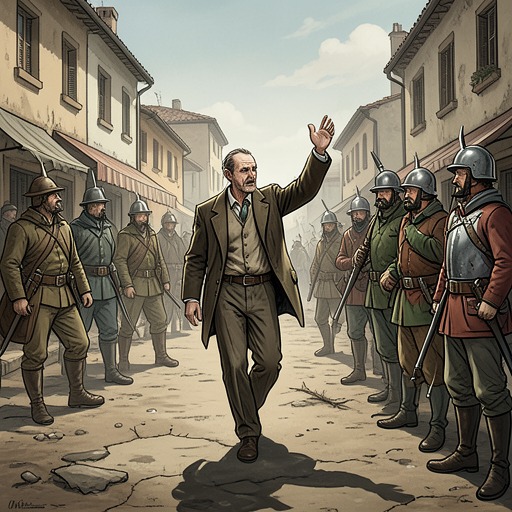
At the end of this approach, the falls lie to the travelers’ left, spray and rainbows catch the light, the sun rises ahead, and the valley opens below them. Haven is there, waiting, roughly three or four kilometres away down the farther valley. The distance matters: the city has become visible, but it is not yet reached. Their arrival remains an immediate goal rather than a completed rescue.
This first sight resolves one uncertainty while leaving another intact. Todd and Viola can see that Haven exists where the landscape led them to expect it; they still do not know whether it is big enough to withstand the army or whether it will give them the help they need. The movement from rumor to sight gives the journey a clear destination, while the remaining distance preserves its danger. Haven is thus both a real settlement in the valley and the fragile promise on which the fugitives’ next hope depends.